A home appliance inventory is a working record of installed appliances and important home equipment. Unlike a full personal-property inventory, this version focuses on the facts you use for service, warranty questions, replacement parts, recalls, and future planning.
What to record for each appliance
- Appliance or equipment name: refrigerator, range, washer, dryer, furnace, air handler, water heater, pump, or another major item.
- Location: the room or equipment area where it is installed.
- Brand, model, and serial number: copied from the data label, manual, receipt, or manufacturer account.
- Purchase or installation date: use the exact date when documented; otherwise mark it as unknown instead of guessing.
- Warranty status: coverage dates plus the location of the written terms, receipt, and registration confirmation.
- Manual and document location: a filename, folder, paper-file label, or manufacturer link.
- Consumable or part detail: filter size, battery type, or another routine replacement item when relevant.
- Service history and next action: the last meaningful service, company used, and any planned follow-up.
Consumer-product recalls often identify affected units by model, serial, or date-code ranges. Keeping a verified record makes it easier to compare your exact unit with a manufacturer or CPSC notice.
Free home appliance inventory printable
Type into the fields before printing or print a blank copy. This worksheet has no save or submit action, and refreshing the page clears the fields.
Home Appliance & Equipment Inventory
Home: ____________________ Updated: ____________________
| Appliance / location | Brand | Model + serial | Purchase / install date | Warranty / document location | Last service / next action |
|---|---|---|---|---|---|
Tip: print additional copies for HVAC, plumbing, electrical, outdoor, or specialty equipment.
How to fill it out without turning it into a weekend project
- Choose one zone: kitchen, laundry, mechanical area, or outdoor equipment.
- Photograph accessible data labels so you can transcribe them in better light.
- Match receipts, installation invoices, manuals, and warranty emails to each item.
- Record missing details as “unknown” and keep moving.
- Add one reminder to revisit incomplete records instead of stopping the whole inventory.
Do not move a heavy, gas-connected, hardwired, or otherwise hazardous appliance just to reach a label. Check the manual, receipt, manufacturer account, or ask a qualified service provider when the label is not safely accessible.
Appliance inventory vs. home inventory
Appliance inventory
Supports service, parts, warranty, recall, maintenance, and replacement decisions for appliances and equipment.
Personal-property inventory
Documents belongings more broadly. Insurance regulators recommend recording identifying details and keeping photos and receipts; ask your insurer what documentation it expects.
Want the whole home organized?
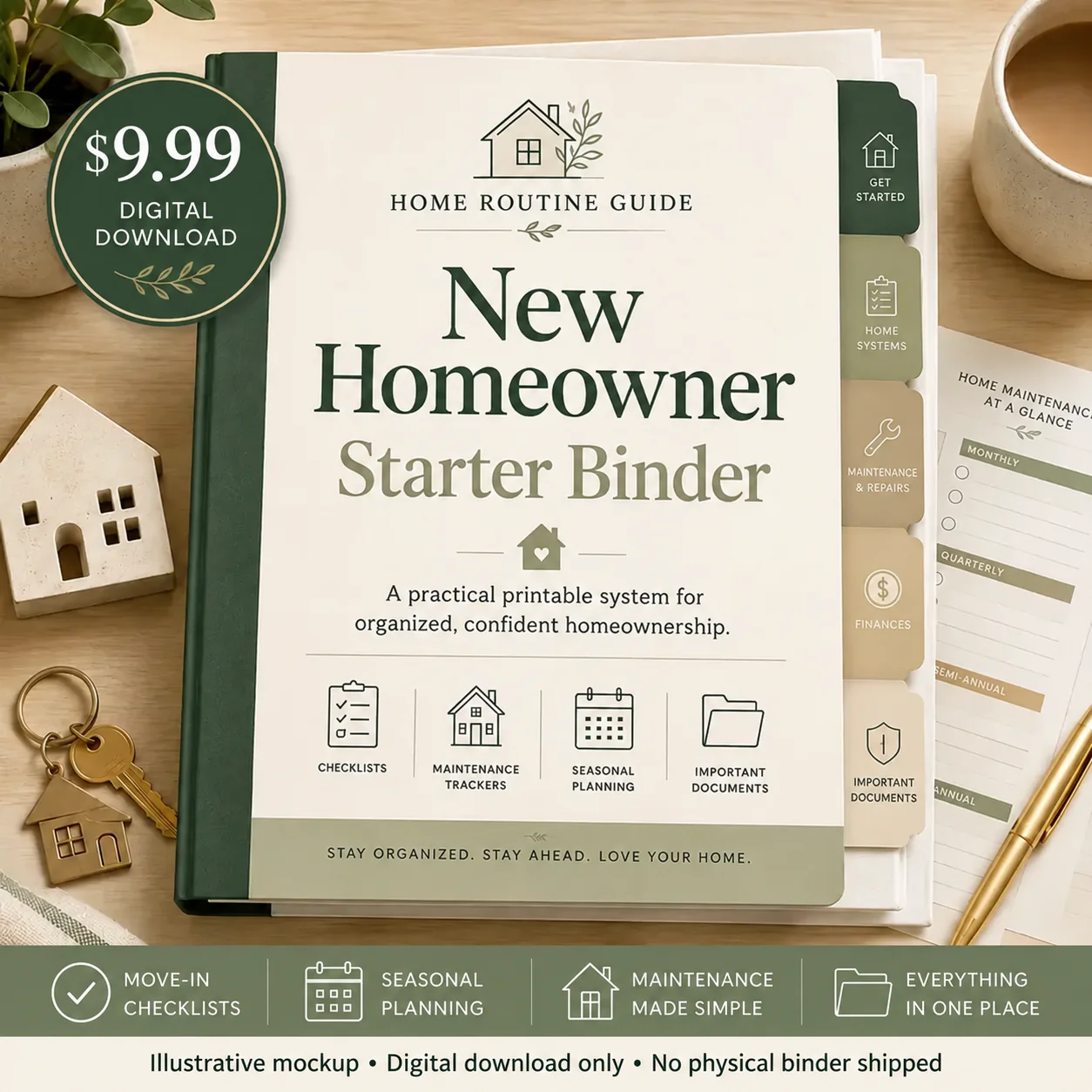
The 44-page New Homeowner Starter Binder expands this single worksheet into guided pages for HVAC, plumbing, electrical, appliances, warranties, service visits, repairs, contractors, maintenance, costs, and future projects.
- Specific prompts and examples
- Connected equipment, warranty, and repair records
- Print only the pages you need
- Instant digital delivery through Kit
One-time digital purchase. Review the digital product terms and refund policy.
Related resources
- Free printable warranty tracker
- Printable home maintenance log
- How to build a home maintenance binder
- See all 44 Starter Binder pages
Primary sources
- U.S. Consumer Product Safety Commission: Recalls and Product Safety Warnings
- National Association of Insurance Commissioners: Home Inventory
Editorial note: This worksheet is for household organization. Follow manufacturer instructions and ask the appropriate manufacturer, insurer, utility, or qualified professional when a record affects safety, coverage, or service.