A warranty becomes much harder to use when the receipt is in one inbox, the serial number is on an equipment label, the warranty PDF is buried in a download folder, and nobody remembers whether the product was registered. A simple tracker creates an index to those records.
Fields to include in a printable warranty tracker
- Item or system: furnace, dishwasher, water heater, roof material, pump, appliance, or other covered product.
- Manufacturer and model: copied from the product label or documentation.
- Serial number: where applicable.
- Purchase or installation date: from the receipt, invoice, permit, or installation record.
- Warranty term or expiration: taken from the written warranty.
- Registration status: whether registration was completed and where the confirmation is stored.
- Receipt/invoice location: a folder or document reference rather than relying on memory.
- Warranty document location: PDF filename, secure folder, manufacturer portal, or paper file.
- Claim/service contact: the correct manufacturer, seller, installer, or warranty administrator.
- Claim or repair history: dates, case numbers, work performed, and next action.
The FTC recommends saving a copy of a written warranty and the product receipt. A tracker should point you to those source documents rather than replace them.
Warranty vs. service contract
Do not assume every protection plan is the same thing. A manufacturer warranty may come with the product, while an extended warranty or service contract can be a separate paid agreement. Record the exact document name and administrator so you know which terms apply.
Where to find the information
| Information | Likely source |
|---|---|
| Model + serial number | Product data plate, invoice, manufacturer account |
| Purchase/install date | Receipt, contractor invoice, permit, order email |
| Coverage term | Written warranty or service-contract terms |
| Registration confirmation | Manufacturer email or portal |
| Claim contact | Written warranty, manufacturer support, contract administrator |
| Past repair | Invoice, service email, repair log |
What not to put on the tracker
A household binder does not need full payment-card numbers, passwords, full bank information, or other sensitive credentials. If a manufacturer portal requires a login, record a secure password-manager reference instead of the password itself.
Connect warranties to equipment and repair history
The tracker becomes more useful when it connects to your broader home records. The equipment page should tell you what you own. The warranty page should tell you what coverage exists. The repair log should tell you what happened, who worked on it, what it cost, and what comes next.
Begin with the free appliance inventory worksheet, then read how to build a printable home maintenance binder and what to track in a home maintenance log.
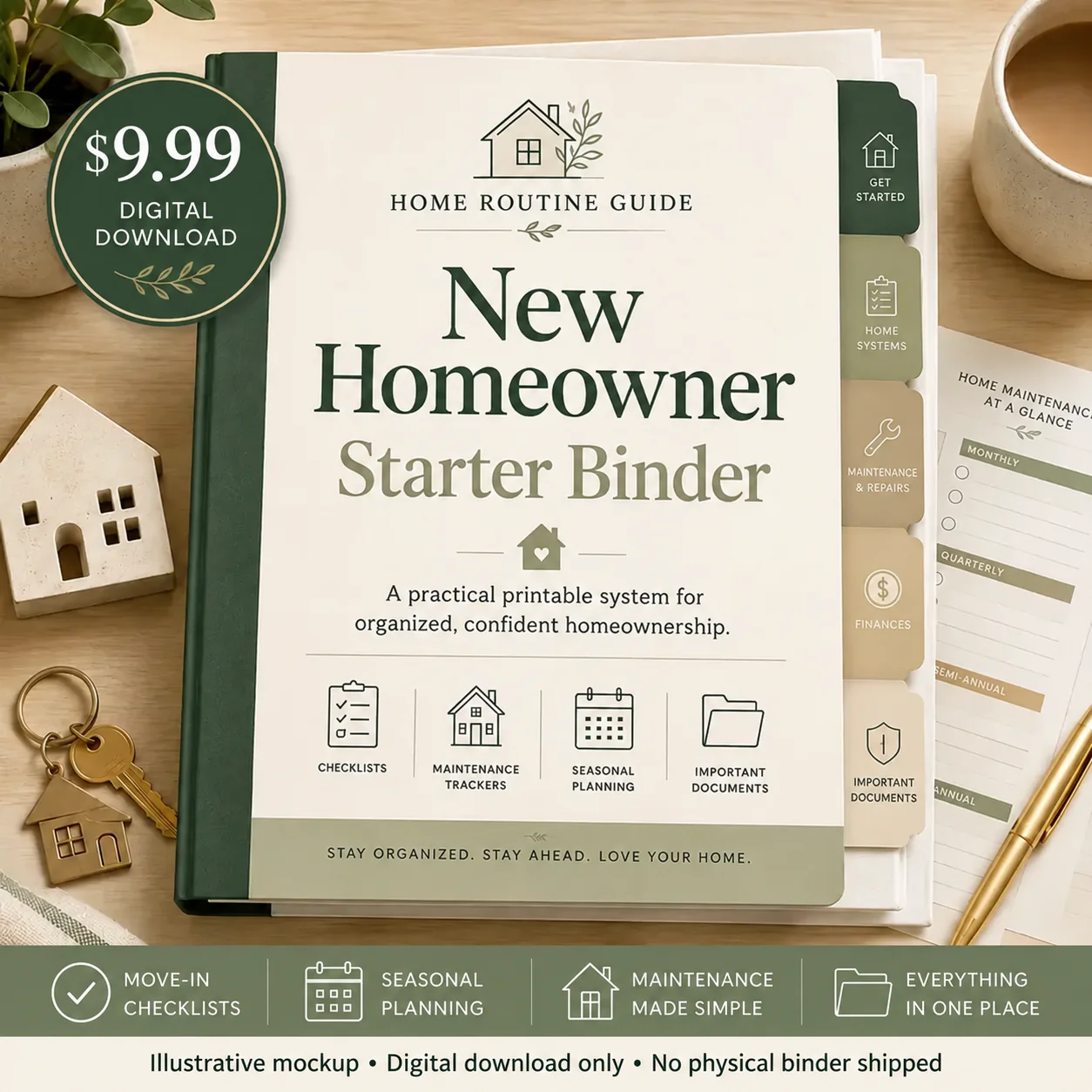
New Homeowner Starter Binder
The 44-page guided binder includes a warranty and manual tracker plus equipment records, service history, repair logs, contractor information, and planning pages so the warranty record is connected to the rest of the home.
- Warranty + manual tracker
- HVAC, plumbing, electrical, appliance, and special-system records
- Service and repair history
- Guided prompts and examples throughout
Primary source
Editorial note: Warranty rights and coverage depend on the written terms and applicable law. This page is for organization, not legal advice.